The need for automated optical inspection
Printed circuit boards play a crucial role in the electrical connection between components such as integrated circuits (ICs), which are assembled onto bare printed circuit boards.
Due to rapid technological progress and the ever-increasing demands we place on electronic equipment, modern circuits must be far more complex than in the past. Furthermore, the introduction of Surface Mount Technology (SMT) has led to printed circuit boards evolving towards miniaturisation and higher density. Nowadays, even a standard printed circuit board contains a large number of solder joints and layers. The use of ever-smaller components creates a need to employ inspection techniques other than visual inspection to ensure that the correct components are fitted with the correct polarity and values.
Visual inspection during the production of PCBs has long been a widely used and accepted method of quality control. Nowadays, however, this method is considered obsolete when used as a stand-alone inspection tool. The reason for this is that this method simply cannot guarantee the detection of all possible (internal) faults.
The current market demands a reliable and rapid inspection method. This is why AOI (Automated Optical Inspection) now plays such an important role in the inspection process. AOI tests reduce inspection costs and enable problems to be identified at an early stage.
The definition of automated optical inspection
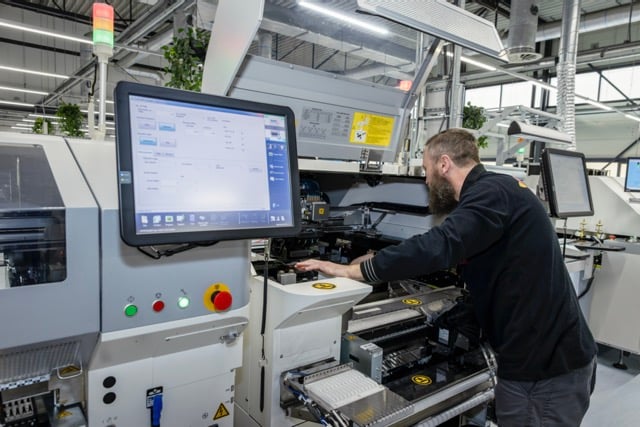
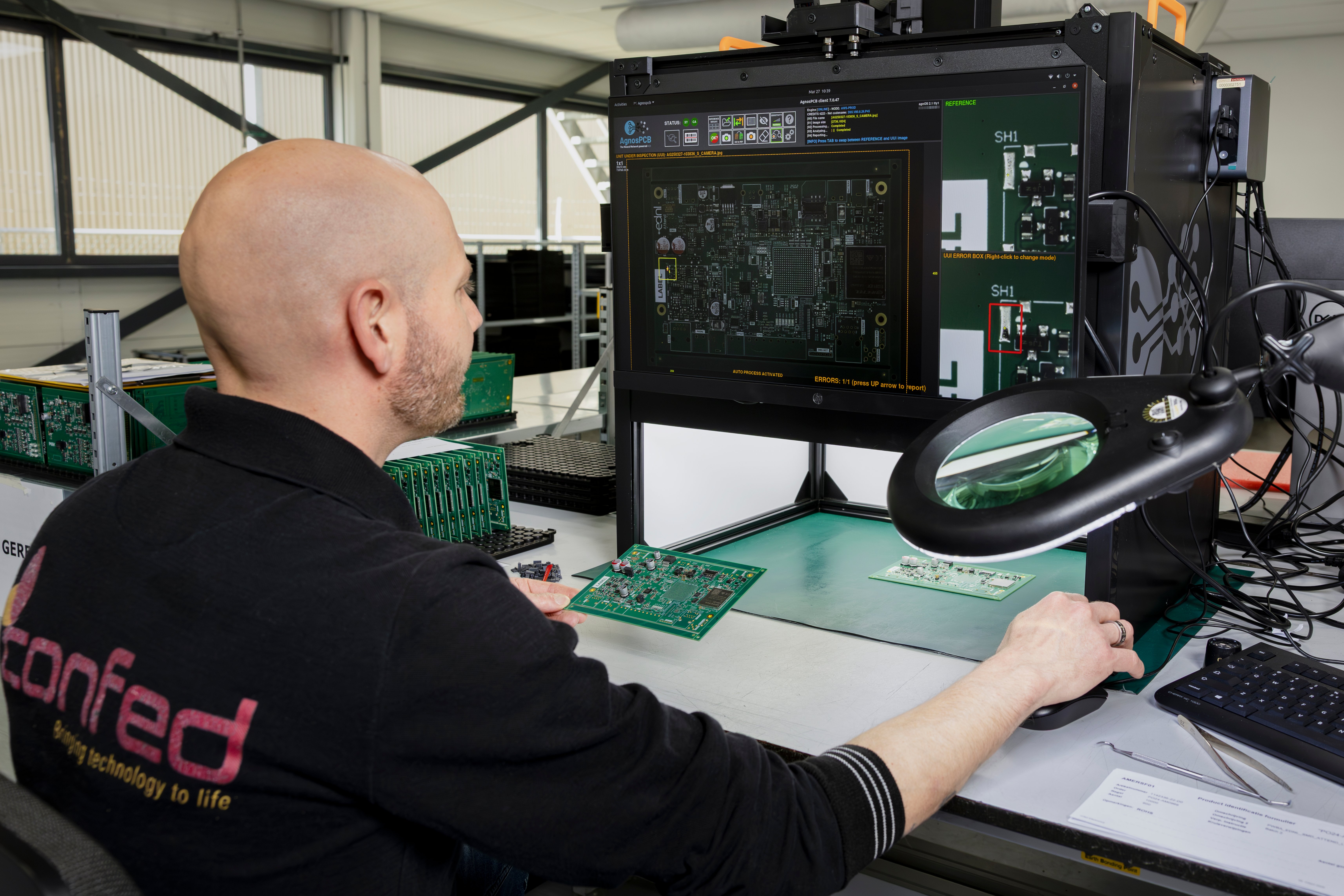
When we talk about Automated Optical Inspection, we are referring to an automated visual inspection of PCBA manufacturing. Depending on the type of equipment, one or more high-definition cameras capture images of the PCB surface using light sources such as LED lighting and infrared or ultraviolet light. A comparison is then made between the captured image and the parameters of the printed circuit board that have been entered into the computer in advance. In this way, differences, deviations or even faults can be clearly identified using the supplied software application. This entire process can be continuously monitored by the operator.
The role of AOI in PCB assembly
Automated Optical Inspection forms part of the PCB assembly process. It takes place during production. It can be implemented at various stages of the process, such as when the board is still bare, but also during the inspection of the solder paste or during a pre-reflow and post-reflow phase. It is important that any defects are detected as early as possible in the PCB process. AOI is ideally suited for this purpose.