Which components are certified?
The UL certificate confirms that an organisation complies with all applicable safety regulations and standards. UL certifies staff, products, facilities, processes and systems. We will briefly explain what this entails.
-
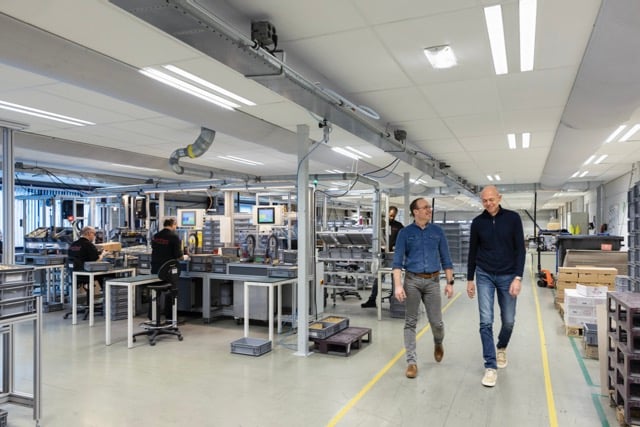
Certification facility. Here, plans are assessed, evaluations are carried out to verify compliance with installation codes, the performance of production equipment is assessed, and more.
-
Personal certification. These certifications demonstrate that staff are able to carry out their work safely and effectively, based on industry-accepted and standardised skills.
-
Process certification. This certification demonstrates that the business processes comply with the relevant standards and requirements.
- Product certification. These certifications demonstrate that the products have been tested in accordance with the applicable standards. UL’s recognised expertise in the field of regulation provides assurance to the authorities and the market. This also applies outside Europe.
When is a UL certificate required?
A UL (Underwriters Laboratories) certificate is, amongst other things, a necessary requirement if you wish to export products to the (North) American or Canadian markets. A manufacturer of consumer or industrial products wishing to export to these markets must ensure that their products comply with a wide range of technical regulations in order to obtain the Underwriters Laboratories (UL) mark. The UL logo indicates compliance with US and Canadian requirements and federal legislation. UL is generally regarded as the equivalent of the CE marking used in the European Union.