In the assembly process for electrical products, alongside the countless possible components, many other factors play a crucial role. These include aspects such as long-term reliability or the product’s appearance. With all these factors and components, a vast spectrum emerges within which products can be classified as good, poor or somewhere in between. The IPC-A-610 standard provides clarity in this regard and is therefore divided into three classes. These are distinguished by a defined set of principles and quality criteria, with levels of quality increasing progressively. We would like to briefly explain these different grades.
Class 1
Class 1 in electrical assembly is also the lowest level within the standard for the assembly of electronic products. It applies the most lenient standards to assembly, and a few minor defects are (often) acceptable. Such products are usually used for low-cost items with a low impact, such as mass-produced consumer goods like small promotional giveaways. Although they must function as expected, their service life is short. Electronic products assembled to Class 1 standards are low-priced, which justifies the lower quality.
Class 2
Class 2 IPC standard is the most commonly required class for the assembly of non-critical electrical components. Products in this class do not need to meet the very highest quality standards, but they are expected to have a guaranteed long service life. As with the first class, however, this category also permits certain defects, provided these do not compromise the required reliability. In this class too, the product must function in accordance with specifications, but it does not need to look flawless. For example, small traces of flux resulting from soldering are permitted.
Class 3
Class 3 within electronics assembly requires the finest finish in terms of quality, durability and precision. Class 3 is required for many high-quality electrical products. This is because this class entails very strict requirements.
These high-quality electrical assemblies are of the very highest standard and therefore require a longer production time and consequently incur higher costs. After all, quality demands more time and attention.
Who benefits from IPC-A-610 certification?
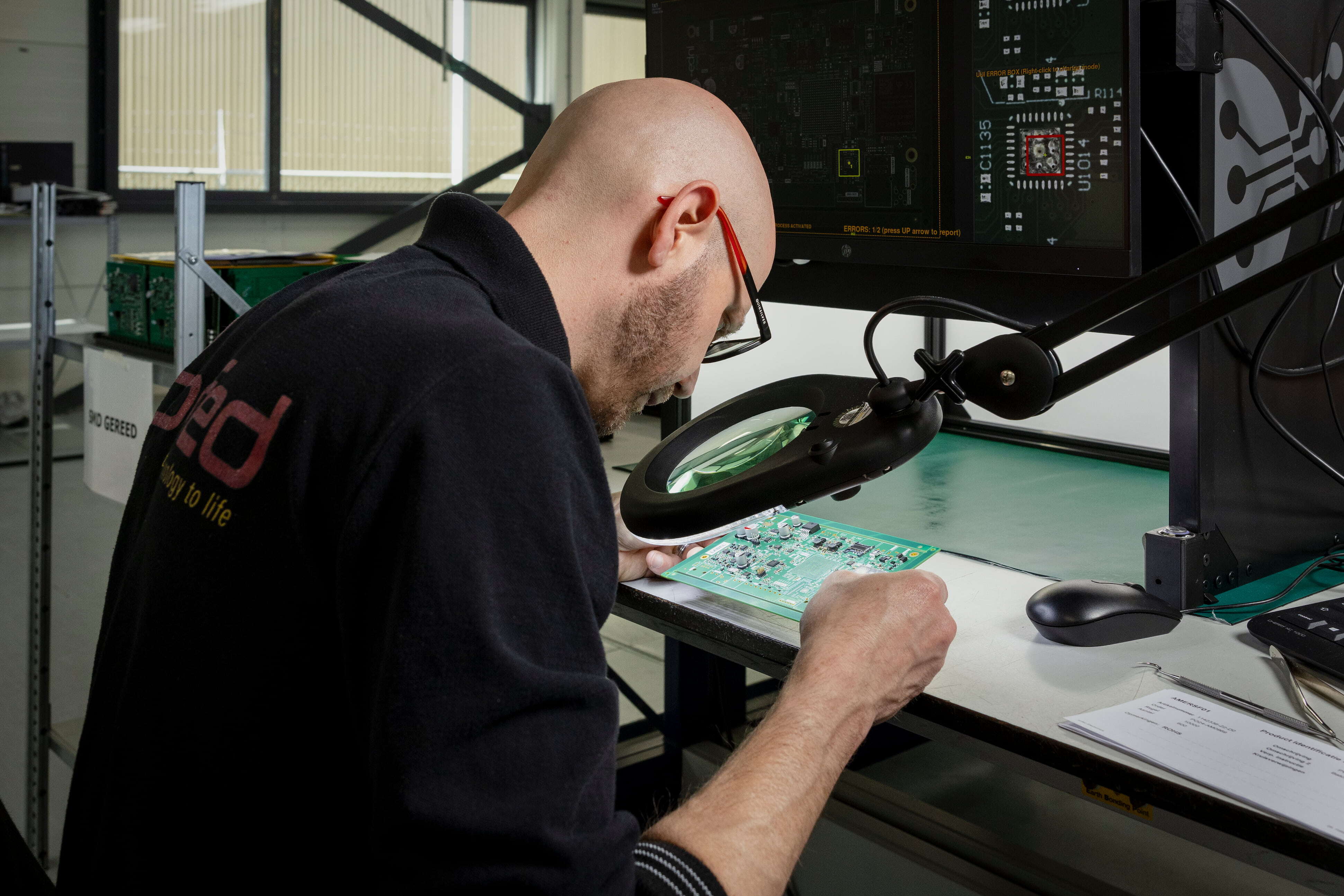
With the IPC-A-610 certificate, Confed demonstrates that it possesses specialised and in-depth knowledge of electrical assembly and soldering techniques. This certification ensures the reliability and quality of every electrical assembly. It demonstrates that Confed can guarantee compliance with IPC standards in PCB assembly.
Through this certification, companies are officially recognised by the IPC. These companies thereby demonstrate that they possess thorough knowledge of all the relevant documentation and a high level of competence in its application. Once a company has obtained this certification, a process begins whereby its knowledge is continuously kept up to date and the certificate must be reapplied for and renewed every two years. In this way, the company’s certification remains current and accurate.